
Cassava Starch Processing Line: Wet vs Dry Milling
A cassava starch processing line separates starch from fibre, protein and sand in water, while cassava flour comes from dry milling of dried chips. A wet line is designed for over 96 percent starch recovery, below 30 cubic metres of water and below 180 kWh per tonne of starch.
A cassava starch processing line is built around wet extraction: water carries the starch out of the root, and the equipment that follows separates, concentrates, dewaters and dries it. This article sets out how the two lines differ, the steps of wet extraction, why modified starch is specified, and how capacity corresponds to configuration.
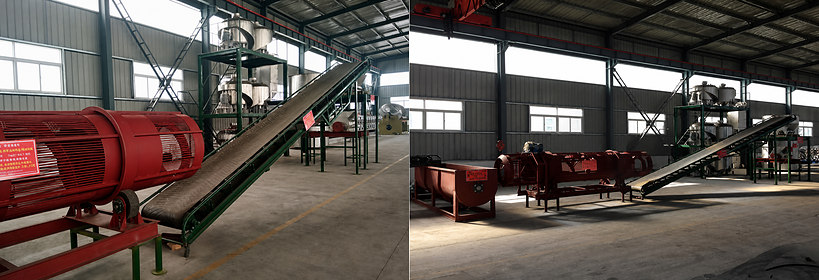
Cassava Starch Processing Line Against a Cassava Flour Line
Cassava starch and cassava flour differ in product, buyer and process: starch is separated wet for industrial use, flour is milled dry for food use. Selecting one route when the market requires the other is the most common scoping mismatch.
|
Dimension |
Cassava flour line (dry) |
Cassava starch line (wet) |
|---|---|---|
|
Feed |
Dried chips |
Fresh root or dried chips |
|
Process |
Milling and grading |
Water-medium extraction |
|
Output tests |
Colour and cooking behaviour |
Whiteness and purity |
|
Water |
Low |
High, wastewater plan required |
Different Products for Different Buyers
Cassava flour is a food ingredient, judged on colour, smell and cooking behaviour, and it competes with wheat and maize flour in bakery, snack and noodle applications. Cassava starch is an industrial raw material, judged on whiteness, moisture and purity, and it goes into food processing, sugar syrups, pharmaceuticals, feed, textiles, paper and chemicals. The tests that decide acceptance are not the same, so a specification written for flour cannot be met by starch, or the reverse.
Dry Milling Against Wet Extraction
Dry milling grinds dried chips to a powder, which is a short flowsheet with little water and no wastewater treatment. Cassava wet milling, by contrast, separates starch granules from fibre, protein and sand in water, then concentrates, dewaters and dries the slurry. The wet route carries more equipment, more water and a wastewater plan, and it is the only route that reaches industrial starch specifications.
Send the root starch content, the required grade and the target daily output, and ABC Machinery will confirm the extraction section, the drying duty and the equipment list for the cassava starch processing line.

Key Steps in Wet Extraction
Wet extraction follows the same order in most plants: wash, crush, screen, desand, separate, dewater, dry and pack. Each cassava starch extraction machine carries a measurable target, and those targets are what a quotation is checked against.
Washing, Peeling and Crushing
A drum washer sprays, scours and peels the root, with a peeling rate above 80 percent. Crushing runs in two passes so that the granules are released from the root structure: the first pass screens the slurry through openings of about 8.0 mm and the second through 1.2 to 1.4 mm, so the second pass narrows the opening by about 84 percent (8.0 minus 1.3, divided by 8.0, is about 0.84). Water is added at 1:4 in washing and 1:1 in crushing.
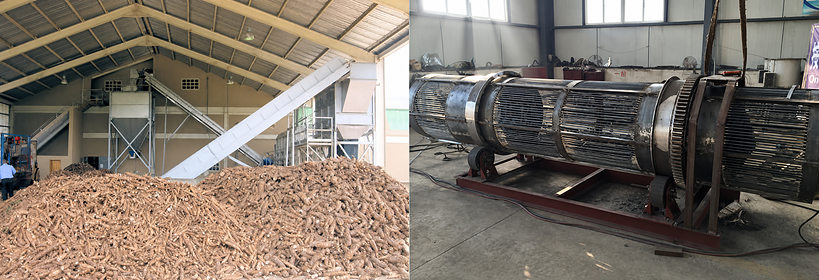
Cassava starch processing line: cassava receiving and the desliming and peeling machine
Screening and Desanding
Screening separates starch milk from fibre at a slurry concentration of 5 to 6 Be. A pressure sieve and a vertical centrifugal screen work together, with the fibre stream washed counter-current. The targets are a refuse starch content below 35 percent with free starch below 5 percent, and a fibre impurity content in the milk below 0.05 percent. A hydrocyclone group removes sand on the density difference and protects the separator downstream.
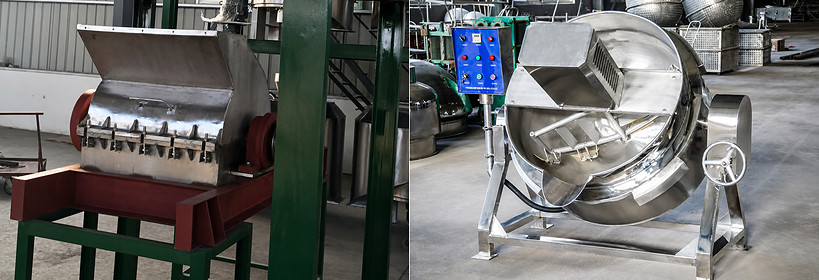
Cassava starch processing line: hammer crusher and rotary screening machine
Centrifugal Separation and Dewatering
Disc separators run in series to wash, refine and concentrate the milk. The first pass takes 5 to 6 Be in and delivers 12 to 15 Be out; the second takes 8 to 10 Be in and delivers 20 to 22 Be out. A scraper centrifuge then dewaters the concentrate, leaving wet starch below 38 percent moisture.
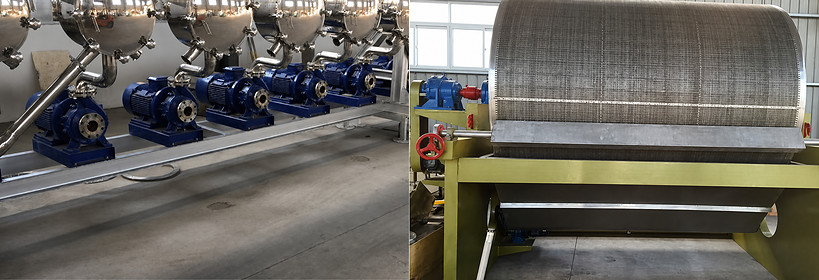
Cassava starch processing line: hydrocyclone group and vacuum dehydrator
Drying and Screening
An airflow dryer takes the dewatered starch to a finished moisture of about 13.5 percent, with steam controlled at 0.8 MPa. Drying cuts moisture from below 38 percent to about 13.5 percent, a reduction of about 65 percent (38 minus 13.5, divided by 38, is about 0.65). Screening follows drying and packing closes the line. Only the drying stage runs above ambient conditions, and material passes from feed to finished starch in about 30 minutes.
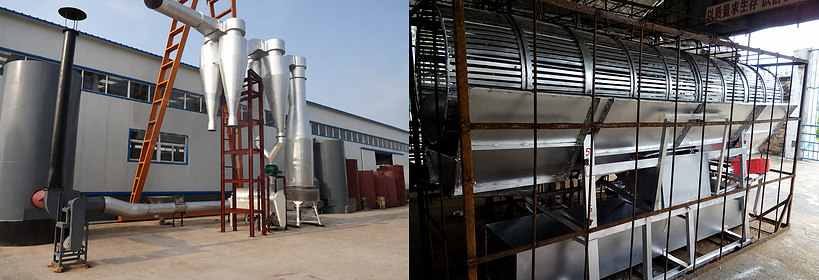
Cassava starch processing line: airflow dryer and rotary screening drum
Modified Cassava Starch: Why Some Buyers Specify It
Modified starch is specified when the buyer's process needs behaviour that native starch does not provide, and the modification is what changes the equipment list.
Purpose of Modification
Pregelatinized starch is one grade of modified starch. It is produced so that the starch thickens without a cooking step, which suits buyers who cannot heat the product, including briquette binders, textiles, food, paper, building materials, casting and oil drilling fluids. The same root, extracted the same way, leaves the plant as a different product for a different buyer. Whether a modification section is added follows the target buyer's process, not the root itself.
Common Types and How Equipment Differs
Native wet extraction ends at the dryer and the packing machine. A modified starch line inserts mixing, extrusion and cutting after the raw material stage: raw material, mixer, extruder, drying, crushing, screening, packing. In a published 10 t/d pregelatinized configuration the equipment totals 104.7 kW across nine machines, dominated by an extruder of 75 kW, with a mixer of 11 kW rated at 500 kg per batch and a grinder of 15 kW supplied with four sieves. The same line is rated at 400 kg/h, and 400 kg/h x 24 h = 9.6 t/d, which is the 10 t/d nameplate rounded.
Send the incoming root analysis and the target output and ABC Machinery will return the extraction section and the drying load step by step.
Configuration and Capacity of a Cassava Starch Processing Line
Capacity is a starting point rather than a specification. A wet line is sized from the starch content of the incoming root: fresh cassava averages 27 percent starch and dried chips about 68 percent, so the same finished tonnage draws different quantities of raw material, water and labour from the two feed types. The design figures for the wet route are a commercial starch recovery above 96 percent, water below 30 cubic metres per tonne and power below 180 kWh per tonne of starch. Modified starch lines are quoted on the finished product and add the extrusion section to the same base. Where the starch content of the local root or the required grade has not been tested, the figures follow a site analysis rather than an assumption. Capacity tiers and their equipment configuration are set out in the flour mill plant capacity selection guide, and the existing cassava pages cover the flour route, the processing machinery and the business plan stage.
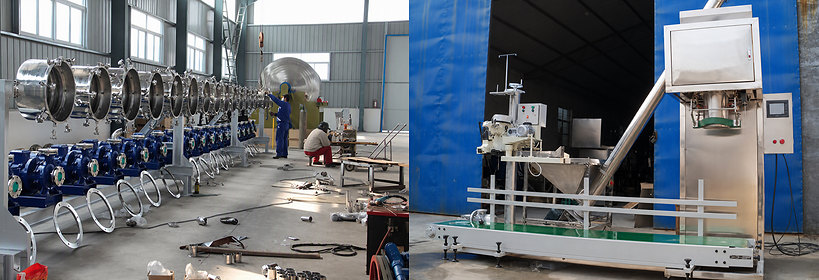
Cassava starch processing line: refining equipment and the automatic packing machine
Send the product the market asks for and ABC Machinery will confirm which of the two lines the specification calls for.
- Is a cassava starch processing line the same as a cassava flour line?
- No. The two lines differ in feed preparation, in the unit operations that follow, and in the specification of the output. A flour line grinds dried chips and grades the powder; a starch line separates the granule in water, concentrates it and dries it.
- How is the water balance of a cassava starch processing line set?
- Two ratios carry most of the figure: washing at 1:4 and crushing at 1:1 against the root, with screening and washing run counter-current so that the last wash water is reused against the incoming fibre. Design water consumption is below 30 cubic metres per tonne of starch, and the wastewater plan is part of the scope.
- Does a modified starch line need a different extraction section?
- No. Extraction, separation and dewatering are shared, and the difference starts after the raw material stage, where mixing and extrusion are inserted ahead of drying.
- Single Flour Milling Machine
- Small Scale Flour Mill
- Large Scale Flour Mill
- Storage Silos
- Pneumatic Grain Conveyor



- Small Maize / Corn Flour Mill Machinery Design and Layout
- How to Choose a Reliable Small Wheat Grinding Machine Sale?
- How to Set Up Your Own Mini Wheat Flour Milling Plants at Home?
- Soy Protein Isolation Production Line Cost
- Cost of Setting Up A Soybean Isolate Protein Plant
- Characteristics And Application of Soy Protein Isolate
- How to Maintain Your Own Home Flour Mill Equipment
- How to Make Maize Flour at Home
