
10-50 Ton/Day Wheat Flour Mill Machinery Cost and Profits
Considering a 10-50 Ton/Day (small to medium-scale, 5~30TPD small, 30~80TPD medium) wheat flour mill but stuck on core questions: What’s the real cost of flour mill machinery for these capacities? As a low-risk, growth-focused entry into the stable flour industry, 10-50TPD operations skip the exorbitant costs and high-tech complexity of 80~500TPD large mills—perfect for entrepreneurs targeting local or regional markets. (Related Post: 50-500TPD Large Flour Milling Plant Cost Analysis)
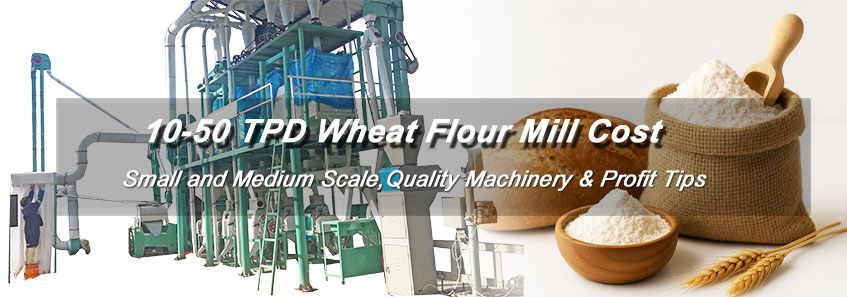
10-50 TPD Wheat Flour Mill Machinery Cost & Investment Guide
Partnering with ABC Machinery takes the guesswork out of your venture. Beyond supplying high-quality, moderately automated wheat flour mill machinery designed for 10-50TPD operations (no unnecessary smart features), we offer end-to-end one-stop service: from custom factory layout design, targeted equipment selection, and on-site installation/commissioning to worker training and post-operation support.

What Determines the Cost of Flour Mill Machinery for 10-50TPD Operations?
The 10-50 TPD flour milling line cost is a composite of capacity, equipment quality, moderate automation, auxiliary tools, and regional factors—avoiding the high-end intelligence reserved for large-scale (80~500TPD) setups. Below is a comprehensive breakdown of key cost drivers to guide your budgeting.
Core Flour Machinery Costs: The Foundation of Your Investment
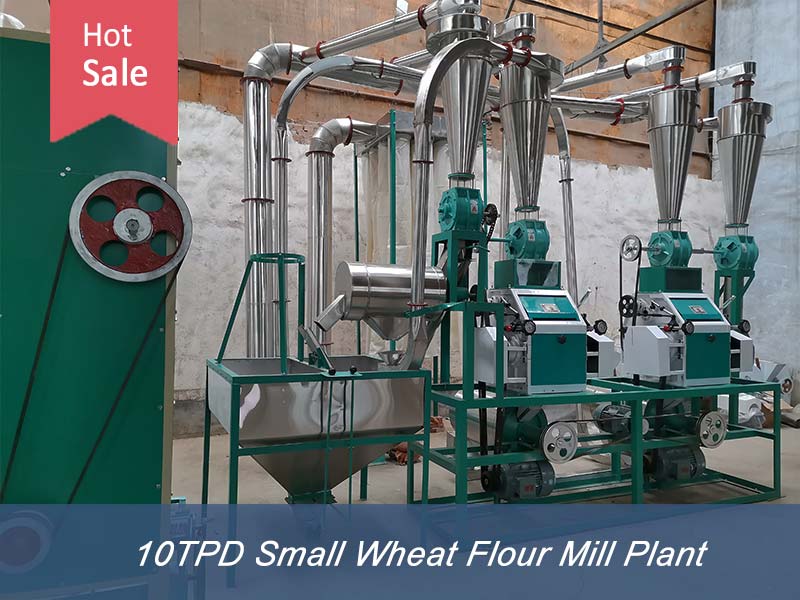
M6FTY-10 10TPD Small Wheat Flour Mill Plant
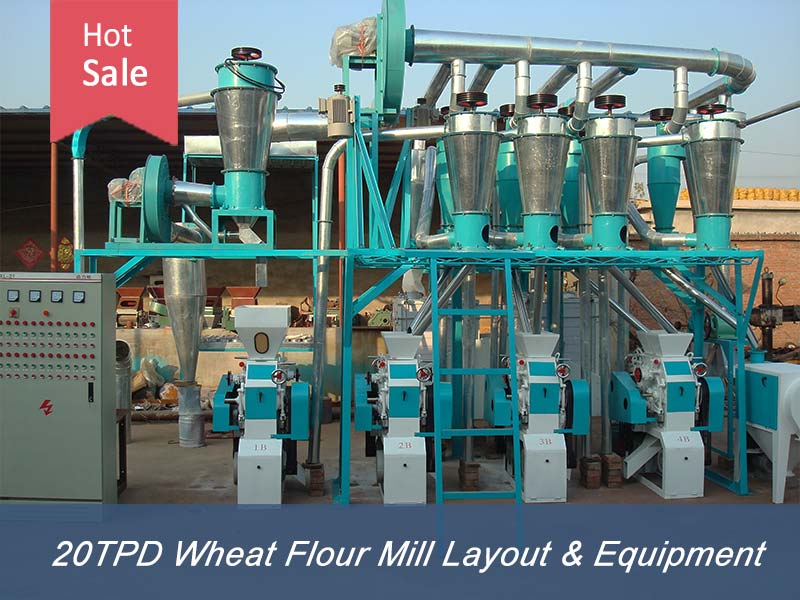
M6FTY-20 20TPD Wheat Flour Mill Layout & Equipment
The flour milling line is the foundation of your investment, with prices scaling based on capacity and moderate automation (not industrial-grade smart systems). Here’s a detailed breakdown tailored to 10-50 TPD (small to medium) operations:
-
10-30 TPD Small-Scale Semi-Automatic Lines: Falling within the 5~30TPD small-scale range, these lines rely on semi-automatic equipment: manual feeding auxiliary cleaning machines (destoners, scourers), basic roller mills, vibrating sifters, and simple packing stations. The small wheat flour mill machine price in this range is ideal for rural entrepreneurs, community cooperatives, or home-based businesses, catering to local bakeries and households. They prioritize ease of operation over complexity, with minimal training required for staff.
Typical models and their core specs are shown below:
Model Capacity (TPD) Extraction Rate Power Consumption (kw) Footprint (L×W×H) M6FTY-10 10 78-82% 26.5 6.6×3.8×3.5m M6FTY-20 20 80-85% 59.9 18×7×5m -
30-50 TPD Medium-Scale Moderately Automated Lines: As part of the 30~80TPD medium-scale category, these lines add basic automation (e.g., semi-automatic material conveying, simple PLC control for milling parameters) but avoid advanced features like remote monitoring or fully automated quality sorting (reserved for large-scale setups). Core equipment includes multi-stage roller mills, high-capacity sifters, and bulk storage bins (not automated silo systems). The commercial flour mill machine price here reflects durability and batch processing capability—suited for regional distributors or mid-sized food processors. (Related Read: 40TPD medium-scale Wheat Flour Mill Machines in Ethiopia)
Auxiliary & Operational Costs to Plan For
Beyond core machinery, these expenses add 25-40% to your total investment—critical for small to medium-scale operations where cash flow is often tight:
-
Operational Costs: Recurring expenses focus on manual labor and basic utilities:
-
Electricity: $600–$2,500/month (lower than large-scale mills, as semi-automatic equipment uses less power).
-
Labor: 3–8 workers (3–5 for 10-20TPD, 6–8 for 30-50TPD) – medium-scale lines still require manual oversight for feeding, packing, and equipment maintenance.
-
Maintenance: $300–$900/month (simple parts replacement, no costly software updates or smart component repairs).
-
Packaging: $400–$1,500/month (manual or semi-automatic sealing machines, no automated labeling lines).
-
-
Installation & Layout Design: $6,000–$25,000. Small-scale setups require basic layout planning (e.g., separating cleaning and milling zones), while medium-scale 30-50TPD lines need optimized workflow design (raw material storage → processing → packaging) to reduce manual labor. Professional installation includes equipment calibration and electrical setup, but no complex integration with smart systems.
-
Raw Material & Storage: $12,000–$45,000. Initial wheat inventory costs vary by region (e.g., wheat flour mill machine price in India is aligned with local grain prices), and storage solutions are simple: silo bags or small warehouses (not automated climate-controlled facilities). Sourcing high-quality wheat is key—learn how to select grains that maximize yield without relying on expensive testing equipment.
-
Regulatory & Administrative Costs: $2,000–$6,000. Small to medium-scale operations face fewer compliance hurdles than large mills—costs include basic business licenses, food safety certifications (e.g., GB1351 for wheat flour), and local permits.
Key Factors Influencing Flour Mill Machine Prices (Small to Medium-Scale)
Several variables shift costs within the 10-50 TPD range, with a focus on practicality over technology:
-
Automation Level: Moderate automation (e.g., semi-automatic conveying) adds 15-25% to small-scale costs but reduces labor hours—avoid overinvesting in unneeded smart features.
-
Brand & Build Quality: Reputable manufacturers offer durable machinery (rust-resistant rollers, sturdy frames) but charge a 10-15% premium—critical for medium-scale lines handling daily batch processing.
-
Regional Logistics: Shipping and import duties add 10-20% to the base flour mill machine price, especially for international projects (e.g., 10TPD lines in Kenya or 40TPD lines in Ethiopia).
-
Customization for Local Grains: Adjustments for regional wheat varieties (e.g., harder wheat in Pakistan) add $3,000–$8,000 but improve extraction rates and flour quality.
How Does Capacity Impact Profit? A Simple Guide to Small to Medium-Scale Wheat Flour Mills
Profitability for 10-50 TPD operations hinges on scale fit, market access, and operational practicality—not high-tech efficiency. Below is a clear breakdown aligned with small (5~30TPD) and medium (30~80TPD) scale standards:
|
Capacity (TPD) |
Key Advantages |
Ideal Market & Scenario |
Profitability Traits |
|---|---|---|---|
|
10-20 |
Low upfront investment, easy operation, flexible for niche demand (e.g., organic flour) |
Rural communities, small towns, home-based businesses |
Higher per-unit profit (fresh, local flour commands premium); low risk; steady repeat customers (bakeries, households) |
|
20-30 |
Balanced output, lower per-unit costs than 10-20TPD, semi-automatic labor savings |
Suburban areas, regional small-scale distributors |
Consistent margins from bulk orders; reduced waste with slightly higher capacity; room to add 1-2 specialty flour types |
|
30-50 |
Moderate batch processing, basic automation for efficiency, broader distribution reach |
Urban peripheries, mid-sized food processors, regional wholesalers |
Lower per-unit costs via bulk wheat sourcing (10% discount vs. small-scale); stable revenue from long-term contracts; minimal reliance on niche markets |
4 Profit-Boosting Strategies for 10-50 TPD Wheat Flour Mill Owners
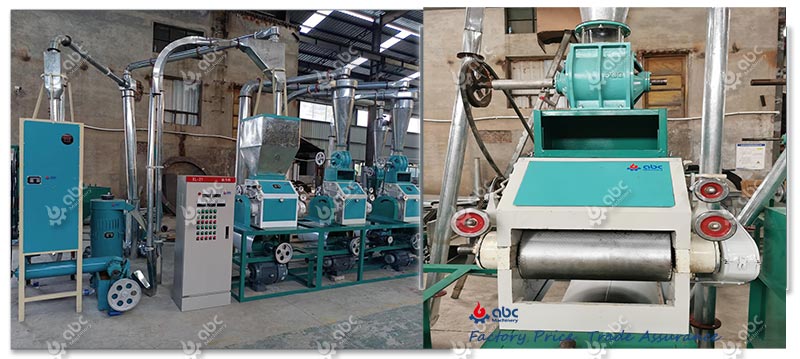
Small Wheat Flour Mill Core Machinery
Small to medium-scale operations thrive on practicality, not technology. Below are actionable strategies to optimize cost and profit without overcomplicating your setup:
1.Choose Machinery That Fits Your Scale (Not Overinvest in Automation)
Avoid “Future-Proofing” with Unneeded Tech: A 50TPD medium-scale line doesn’t require automated quality control—manual sampling and basic testing kits are sufficient. Prioritize durability (e.g., heavy-duty rollers) over smart features to keep the cost of flour mill machinery in check.
Match Capacity to Local Demand: For small-scale 10-20TPD operations, target rural areas where large mills don’t deliver fresh flour. For medium-scale 30-50TPD lines, focus on regional hubs with consistent demand from bakeries or schools.
Opt for Multi-Grain Capability: Select machinery that processes wheat and rice (or maize) with minimal adjustments—expanding your product range without additional equipment costs. Many small to medium-scale mills serve diverse local markets where multiple grains are consumed.
2. Optimize Location and Supply Chain for Cost Savings
Proximity to Raw Materials: Locate small-scale mills near wheat-growing villages (reducing transport costs by 30%) and medium-scale lines near regional grain markets. For example, a 40TPD mill in Ethiopia’s wheat belt cuts raw material logistics expenses by $20,000–$30,000 annually. (Read More: How to Choose High-quality Wheat? )
Close to End Markets: Medium-scale 30-50TPD lines benefit from being within 100km of urban centers—reducing distribution costs and ensuring flour freshness (a key selling point for regional distributors).
Secure Local Supplier Partnerships: For small-scale mills, partner with local farmers for weekly wheat deliveries (avoiding bulk storage costs). For medium-scale operations, negotiate 6-month supply contracts with grain cooperatives to lock in prices.
3. Boost Operational Efficiency (Without High Tech)
-
Train Staff for Basic Maintenance: Teach your team to clean rollers, calibrate sifters, and troubleshoot simple issues—reducing repair costs by 30-40% annually. Most small to medium-scale machinery suppliers offer free on-site training.
-
Optimize Batch Scheduling: Run small-scale lines during peak local demand (e.g., morning hours for bakeries) and medium-scale lines in 2-shift patterns to maximize output without overtime costs.
-
Reduce Waste with Proper Processing: Master the wheat-to-flour process (cleaning → dampening → milling → sifting) to improve extraction rates—even a 2% increase boosts monthly profits by $500–$1,000 for a 30TPD mill.
4. Market Strategically for Local and Regional Success
Emphasize Freshness and Locality: Small-scale mills can market “daily milled” flour to health-conscious consumers, while medium-scale lines highlight “regional sourcing” to build trust with distributors.
Secure Long-Term Small-Batch Contracts: Partner with local bakeries, schools, or small food manufacturers for regular orders—providing predictable cash flow. For example, a 20TPD mill can secure 3-5 contracts with local bakeries to cover 70% of monthly output.
Leverage Low-Cost Marketing Channels: Use community social media groups, local markets, or word-of-mouth (via satisfied customers) to promote your flour—avoid expensive digital ads unless targeting urban regions.
For small to medium-scale entrepreneurs, 10-50 TPD wheat flour mills strike the perfect balance between manageable cost of flour mill machinery and steady profit—success hinges on matching capacity to local demand and choosing practical, quality wheat flour mill machinery. Start your journey today and capitalize on the global demand for high-quality, locally accessible wheat flour!
- Single Flour Milling Machine
- Small Scale Flour Mill
- Large Scale Flour Mill
- Storage Silos
- Pneumatic Grain Conveyor



- Small Maize / Corn Flour Mill Machinery Design and Layout
- How to Choose a Reliable Small Wheat Grinding Machine Sale?
- How to Set Up Your Own Mini Wheat Flour Milling Plants at Home?
- Soy Protein Isolation Production Line Cost
- Cost of Setting Up A Soybean Isolate Protein Plant
- Characteristics And Application of Soy Protein Isolate
- How to Maintain Your Own Home Flour Mill Equipment
- How to Make Maize Flour at Home
